Best Cat Food Key Factors: A Complete Buying Guide
The best cat food is not one brand or one bag. It is the food that meets your cat’s nutritional needs at the right life stage, at a calorie level your cat can actually maintain, and from a manufacturer you can verify. Since every cat is different, there is no single winner — but there are a handful of best cat food key factors that separate a well-informed choice from a guess. This guide explains each factor using evidence from veterinary and regulatory sources, then closes with a checklist you can use at the store or online.
Here is the short version before we go deeper: check the AAFCO nutritional adequacy statement, match the food to your cat’s life stage, look for animal-source protein among the first ingredients, decide on wet versus dry based on hydration and weight goals, count calories, and ask basic questions about how the food is made. The rest of this article walks through the evidence behind each of those points.
The best cat food key factors at a glance
Six factors do most of the work when you compare cat foods. Each one is explained in more depth below.
- AAFCO nutritional adequacy statement — proof that the food is complete and balanced for a defined life stage.
- Life stage — kitten, adult, senior, or all life stages, plus pregnancy and nursing.
- Protein quality — animal-source ingredients near the top of the list, because cats are obligate carnivores.
- Moisture and food form — wet, dry, or a mix, and what that means for hydration and calories.
- Calorie density and portion control — overfeeding is the most common nutrition problem in cats.
- Brand transparency — who formulates the diet and what quality controls are in place.
Start with the AAFCO statement of nutritional adequacy
The single most important line on any cat food label is the AAFCO statement, also called the nutritional adequacy statement. Under the rules of AAFCO, the Association of American Feed Control Officials, a food may claim to be “complete and balanced” only if it either meets one of the AAFCO Cat Food Nutrient Profiles or passes a feeding trial using AAFCO procedures, according to the U.S. Food and Drug Administration (FDA).
That statement tells you the food is intended to be fed as a sole diet and that it contains every nutrient a cat needs at the recommended level. If a product does not carry this statement, treat it as a treat or a topper — not as a full meal — even if the packaging looks like a complete diet.
It is also worth noticing which kind of claim appears. “Formulated to meet AAFCO nutrient profiles” means the recipe was designed on paper to hit the targets. “Animal feeding tests using AAFCO procedures” means the finished product was actually fed to cats in a trial. Both are acceptable under the rules, but a feeding trial is stronger evidence that the food works in practice. When in doubt, the FDA recommends looking for either reference on the label.
Match the food to your cat’s life stage
AAFCO recognizes two main nutrient profiles for cats: growth and reproduction (kittens, plus pregnant and nursing cats) and adult maintenance. The Cornell Feline Health Center points out that a cat’s nutritional needs change through kittenhood, adulthood, pregnancy, and lactation, and the label should state the life stage the food was designed for.
Some foods are labeled “all life stages.” That can simplify shopping for multi-cat households, but know what it means: an all-life-stages food is formulated to the stricter kitten standard, so it can be more calorie-dense than a typical adult cat needs. If your adult cat is overweight, an adult maintenance formula is usually the better fit. There is no separate AAFCO profile for seniors yet, so most “senior” foods are adult-maintenance formulas adjusted for aging cats. Talk to your veterinarian about the right plan for an older cat, especially one with kidney, thyroid, or dental conditions.
Protein quality: cats are obligate carnivores
Cats are obligate carnivores, which means they rely on nutrients found only in animal products, explains Cornell’s Feline Health Center. Cats evolved as hunters that eat prey high in protein, moderate in fat, and low in carbohydrates — and their diets still need those general proportions today.
When you read the ingredient list, remember that ingredients are listed in order of decreasing weight. Cornell advises looking for foods in which meat, meat byproducts, or seafood appear among the first few ingredients, because that signals the food contains enough animal-source ingredients to supply essential amino acids and fatty acids — including taurine, an amino acid cats cannot synthesize in sufficient amounts on their own.
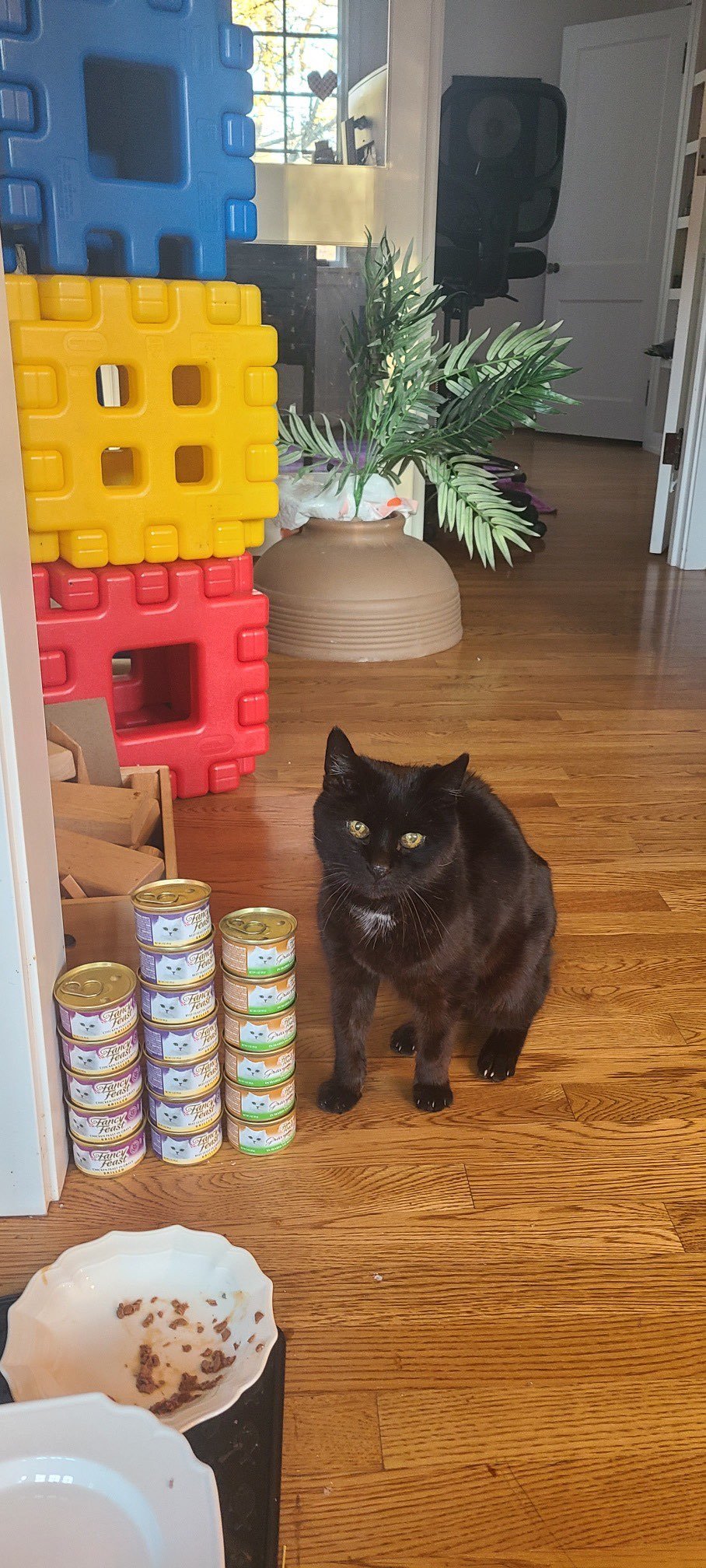
One caution: a high protein percentage on the label only means something after you compare foods on the same moisture basis. Wet food always looks lower in protein than dry food on the label because of its water content. The comparison section below shows how to normalize those numbers.
Wet or dry: the moisture factor
Commercial cat food comes in dry, semi-moist, and canned forms, and these products differ in water content, protein level, caloric density, palatability, and digestibility, per Cornell. Canned food is at least 75 percent moisture (the FDA puts typical values at 75–78 percent), while dry food is only about 10–12 percent moisture. Semi-moist food sits in between at roughly 35 percent.
The practical trade-offs look like this:
- Hydration: Canned food adds meaningful water to a cat’s diet, which matters because many cats drink very little on their own. This is most relevant for cats prone to urinary issues or kidney disease.
- Calorie density: Wet food is less calorie-dense per volume, so a cat can eat a larger portion for fewer calories — helpful for weight management.
- Cost and convenience: Dry food is generally cheaper per serving, does not spoil quickly, and supports free-choice feeding. Canned food costs more, needs refrigeration after opening, and goes bad if left out.
- Dental effects: Despite a popular belief, there is limited evidence that kibble meaningfully cleans teeth. Ask your veterinarian rather than relying on this assumption.
There is no single correct answer. Many cats do well on a combination — canned food for moisture, dry food for convenience. Your cat’s preferences, health history, and budget all factor in. If your cat has a medical condition such as urinary disease, diabetes, or kidney disease, make the choice with your veterinarian rather than by label alone; our health needs guides cover the most common situations. For a deeper look at the trade-offs, see our cat food types overview.
Calories and portion control
Obesity is the most common nutrition-related problem in cats, according to Cornell, and it raises the risk of health problems including arthritis and diabetes. That means how much you feed can matter as much as which brand you choose.

Since 2017, complete and balanced pet foods have carried calorie statements on the label, usually as kilocalories (kcal) per cup or per can. Tufts University’s nutrition experts note that calorie density matters when you compare foods: a calorie-dense food fed in the same volume as a lighter food will quickly add pounds. As a rough reference, cat foods around or under roughly 150 kcal per 6-ounce can — and near or under 300 kcal per cup for dry food — are on the lighter side and useful when weight management is the goal.
Treats count too. Cornell recommends keeping treats to no more than 10–15 percent of a cat’s daily calories, and remembering that most treats are not complete and balanced. Weighing your cat’s food with a kitchen scale, rather than eyeballing cups, is one of the easiest ways to keep portions consistent across time.
Brand transparency and safety
A less obvious but important factor is how much a manufacturer will tell you about how its food is made. Veterinary groups such as the World Small Animal Veterinary Association (WSAVA) encourage owners to ask practical questions: Who formulates the diet — someone with qualifications in animal nutrition? Was the finished product tested in feeding trials? What quality-control and safety procedures are used at the plant? Tools like the Pet Nutrition Alliance’s manufacturer evaluation are designed to help you compare answers across brands. Our questions to ask page turns these into a ready-made script.
Safety is part of this factor too. Recalls happen across all categories of pet food, including premium brands, and they can involve contamination with pathogens or foreign material. It is worth checking the FDA recall list periodically — and our recall alerts page collects those notices in one place. For example, in 2025 the FDA notified pet owners after certain lots of a raw cat food tested positive for H5N1 avian influenza virus, and several cats became ill.
On raw diets specifically, Cornell does not recommend feeding raw or gently cooked diets to cats, citing a lack of proven health benefits and the risk of bacteria, viruses, and parasites that can sicken both cats and the people who handle the food.
How to compare two labels side by side
Comparing foods is only fair when the numbers are on the same scale. The guaranteed analysis on a label gives minimum and maximum values “as fed” — meaning including moisture. A canned food at 78 percent moisture and a dry food at 12 percent moisture cannot be compared directly, because the wet food’s protein number is diluted by water.
The FDA explains the fix: convert to a dry matter basis by dividing the nutrient percentage by the product’s dry matter (100 minus moisture), then multiplying by 100. Here is their worked example for crude protein:
| Variable | Canned food #1 | Canned food #2 | Dry food |
|---|---|---|---|
| Crude protein listed on label | 12% | 11% | 37% |
| Moisture | 78% | 78% | 12% |
| Dry matter | 22% | 22% | 88% |
| Protein on a dry matter basis | 54.5% | 50% | 42% |
Once converted, the “high-protein” dry food at 37 percent is actually the lowest-protein product of the three. All three exceed the AAFCO adult maintenance minimum of 26 percent protein on a dry matter basis. The practical takeaway: do not compare raw label numbers across wet and dry foods. Convert first, or simply choose foods that carry the AAFCO statement and compare within the same food form.
Your best cat food key factors checklist
Here is the checklist to run through before you buy:
- Does the label carry an AAFCO nutritional adequacy statement with a named life stage?
- Does the food match your cat’s life stage (kitten, adult, senior, or all life stages)?
- Are meat, meat byproducts, or seafood among the first few ingredients?
- Does the food form (wet, dry, or mix) support your cat’s hydration and weight goals?
- Do the calories per cup or can fit your cat’s daily needs, and can you portion it accurately?
- Has the manufacturer answered basic questions about formulation, feeding trials, and quality control?
- Have you checked recent recall notices for the brand?
For a step-by-step version of this process, use our decision framework for choosing the best cat food, or grab the printable planning checklist for shopping trips. If a specific question comes up along the way, the questions to ask page gives you a script you can use with a manufacturer or your veterinarian.
Frequently asked questions
Is more expensive cat food always better?
No. Price correlates with ingredients, marketing, and packaging, but not automatically with nutritional quality. A food that meets the AAFCO standard and is backed by feeding trials can be an excellent choice at any price point. Compare on the key factors in this article rather than on the price tag alone.
Is grain-free cat food better for cats?
There is no scientific consensus that grain-free diets are healthier for most cats, and some grain-free recipes are actually higher in carbohydrates and calories, which can work against weight management. If your cat has a diagnosed food allergy, your veterinarian should guide the diet choice; otherwise, grains in moderate amounts are generally not the enemy.
Should I feed wet, dry, or a mix?
It depends on your cat’s health, hydration habits, and your budget. Wet food helps with water intake and weight control; dry food is convenient and economical. Many owners feed a combination. Cats with urinary or kidney conditions usually benefit from more moisture, but confirm the plan with your veterinarian.
How often should I switch cat foods?
Frequent, abrupt switches can upset a cat’s stomach. When you change foods, transition gradually over about a week by mixing increasing amounts of the new food into the old. Some cats eat the same food happily for years, while others appreciate variety; Cornell notes that offering two or three foods can help prevent a finicky eater from locking onto a single exclusive diet.
Is raw cat food safe?
Major veterinary sources, including Cornell, advise against raw diets because of the risk of bacterial and viral contamination and the lack of proven benefits. FDA advisories in 2025 linked certain raw cat food lots to H5N1 contamination. If you are considering raw, discuss the risks with your veterinarian first.
Sources and further reading
- U.S. Food and Drug Administration — “Complete and Balanced” Pet Food
- Cornell Feline Health Center — Feeding Your Cat
- Tufts University Cummings School, Petfoodology — What are these numbers? Nutrition Math 101
- AAFCO — Selecting the Right Pet Food
- Pet Nutrition Alliance / WSAVA — Pet Food Manufacturer Evaluation
- U.S. Food and Drug Administration — H5N1 contamination in certain lots of raw cat food (2025)