Best Cat Food Questions to Ask: A Practical Checklist
If you are trying to choose the best cat food, the fastest way to cut through marketing claims is to ask the right questions before you buy. The best cat food questions to ask are not about which brand is trending online. They are about nutritional adequacy, your cat’s life stage and health needs, protein quality, the brand’s manufacturing standards, recall history, and the real cost per day. This guide walks through each question, explains why it matters, and ends with a checklist you can use at the store or while browsing online.
The short answer: start with the label’s nutritional adequacy statement, then ask about life stage and health needs, animal protein sources, the company’s quality controls, wet-versus-dry format, and calories per serving. If a food cannot answer those basics, keep looking.
The Best Cat Food Questions to Ask: Start Here
These eight questions cover the ground most owners actually need. Each one is explained in more detail below.
- Does the label carry an AAFCO nutritional adequacy statement, and for which life stage?
- Is the food appropriate for my cat’s age, activity level, and health?
- What are the main animal protein sources, and does the food include taurine?
- Can the brand tell me who formulates the food and what their credentials are?
- Where is the food manufactured, and what quality control does the company use?
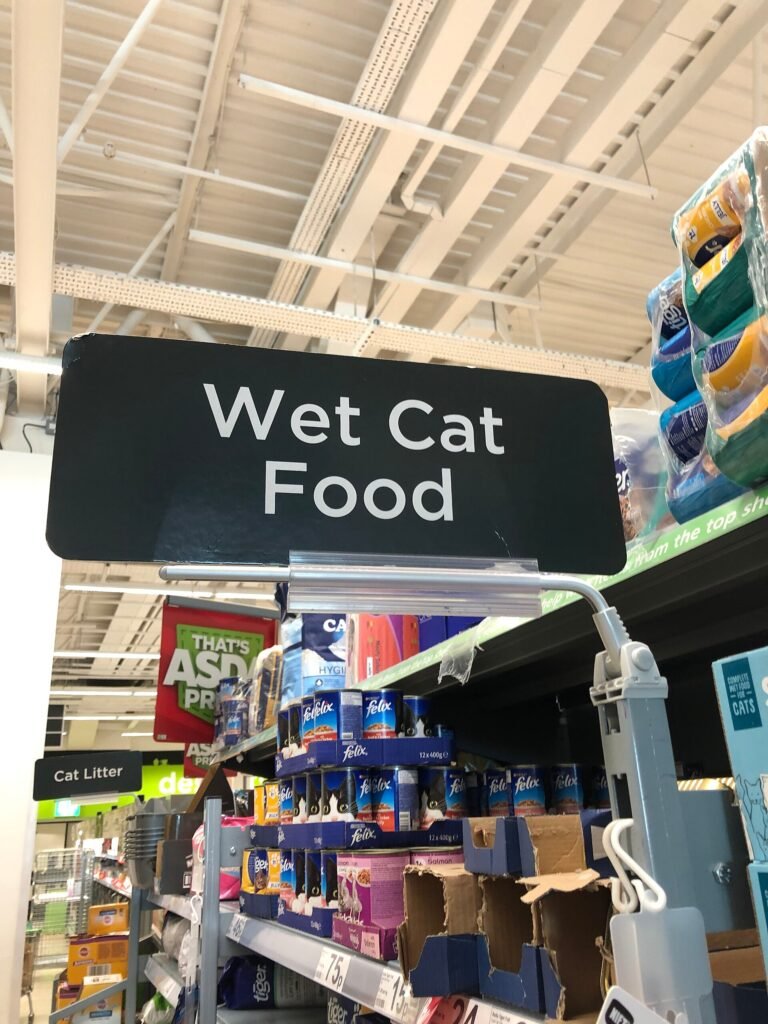
- What is the moisture content, and does wet or dry format fit my cat best?
- How many calories are in a cup or can, and what does a day of feeding cost?
- What is the brand’s recall and safety record?
Why the Questions Matter: Cats Are Obligate Carnivores
Cats are obligate carnivores, meaning their bodies require nutrients that come from animal tissue. Two amino acids illustrate why this matters. Taurine and arginine are found mainly in animal protein, and cats cannot produce enough of either on their own. A diet short on taurine has been linked to serious problems, including dilated cardiomyopathy, a weakening of the heart muscle that can improve when the amino acid is restored to the diet. In short, protein quality is not a nice-to-have in cat food; it is the foundation of the diet.
If terms like “obligate carnivore” or “nutritional adequacy” are new to you, our guide to best cat food essential concepts and key terms explains them in plain language before you start comparing products.
Ask About the Nutritional Adequacy Statement First
In the United States, the phrase “complete and balanced” on a pet food label means the product is intended to be fed as a cat’s sole diet. According to the U.S. Food and Drug Administration (FDA), a cat food may use that phrase only if it meets the AAFCO Cat Food Nutrient Profiles or passes a feeding trial using AAFCO procedures.
So ask three things about the statement itself:
- Is there a nutritional adequacy statement at all? If not, the product may be a treat, snack, or supplement rather than a complete diet.
- Which life stage is named? AAFCO sets separate nutrient profiles for growth and reproduction (kittens plus pregnant and nursing cats) and for adult maintenance.
- How was it substantiated? “Formulated to meet” the AAFCO profiles means the recipe was checked against the nutrient standards, while a feeding trial means the food was tested on animals using AAFCO procedures.
Keep in mind that seals of approval and marketing endorsements are not proof of nutritional adequacy. The adequacy statement backed by AAFCO is the real signal to trust.
Ask About Your Cat’s Life Stage and Health Needs
The best food for a kitten is not automatically the best food for a senior cat. Growing kittens need more protein, calories, calcium, and phosphorus to support rapid growth, while adult maintenance foods trim those levels to avoid excess. Senior recipes often reduce phosphorus to help support aging kidneys, and indoor or neutered cats typically need fewer calories to avoid weight gain.
Health conditions change the answer even more. Chronic kidney disease, urinary tract issues, diabetes, food allergies, and obesity all call for specific diets, sometimes prescription diets, that should be chosen with your veterinarian rather than by guessing. Before switching food for a health reason, ask your vet: What nutrients matter most for my cat’s condition, and which foods are appropriate? Our cat food health needs section covers common conditions in more detail.
Ask About Protein Sources and Ingredients
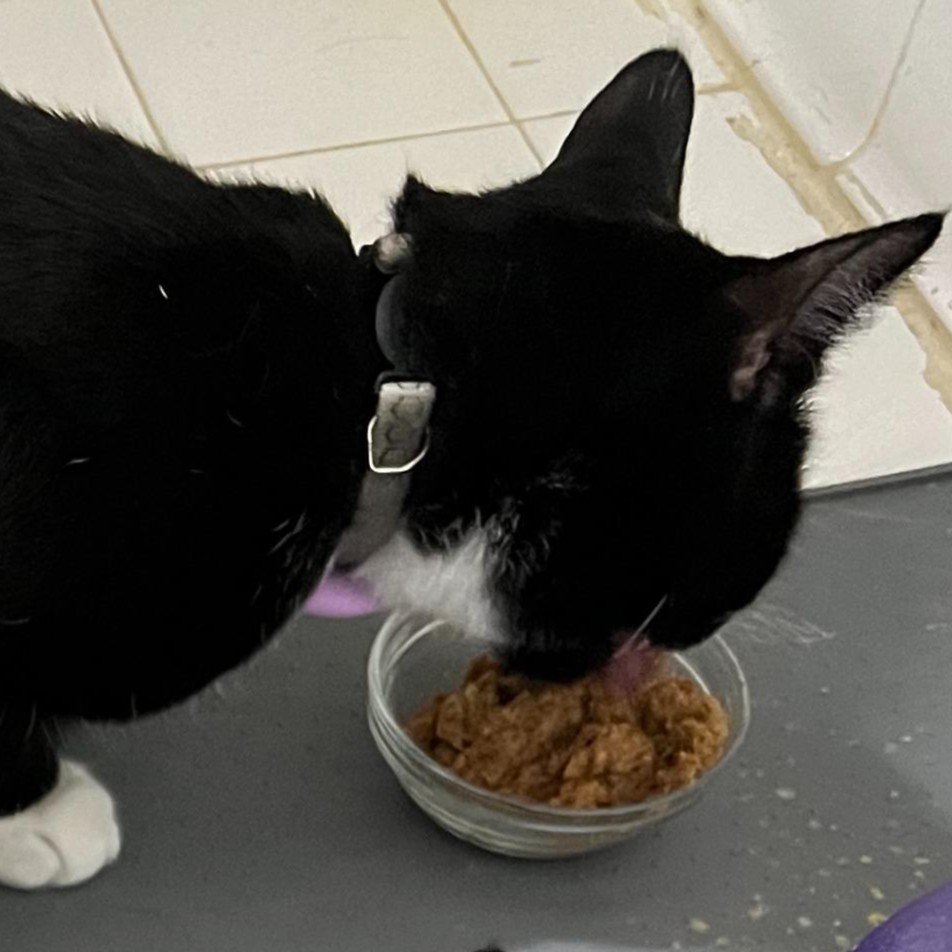
Because cats are obligate carnivores, animal protein should be the backbone of the diet. Look for named animal sources such as chicken, turkey, salmon, or other specific proteins rather than vague generic terms, and check that the whole food is complete and balanced instead of relying on one star ingredient.
Two reading tips help here. First, the guaranteed analysis lists minimums on an “as-fed” basis, while the AAFCO profiles use a dry-matter basis, so wet and dry foods cannot be compared directly without converting. The FDA notes that canned cat food is typically 75 to 78 percent moisture, while dry food is roughly 10 to 12 percent. Second, the ingredient list tells you less than you might expect. As veterinary nutritionists at Tufts University point out, the ingredient list does not reveal ingredient quality or proportions, which is why the adequacy statement and the company behind the food matter more.
Our cat food types guide breaks down the formats, and the buying guides collection covers label reading step by step.
Ask the Brand the WSAVA-Style Questions
The WSAVA Global Nutrition Committee publishes a “Selecting a Pet Food” toolkit with the questions it recommends owners ask manufacturers. Adapted for cats, the key ones are:
- Does the company employ at least one full-time, qualified nutritionist?
- Who formulates the recipes, and what are their credentials?
- Are the diets tested using AAFCO feeding trials, or formulated to meet AAFCO profiles?
- Where are the foods manufactured, and does the company own the plants?
- Can they provide a complete nutrient analysis for the food in question?
- What quality control and safety measures are used during production?
- Does the company publish research, and does it avoid attacking competitors with myths?
You can usually find answers on a brand’s website or by contacting its customer service team. If a company dodges the question about who formulates its food, that is an answer in itself. Our brand reviews hub collects the kind of manufacturer information worth checking before you commit.
Ask About Recall and Safety History
No food is completely risk-free, so recall history is a fair question. In recent years the FDA has issued advisories for raw cat foods contaminated with Salmonella and Listeria, and raw diets have also been linked to H5N1 avian influenza cases in cats. That does not mean every raw product is unsafe, but it is a reason to check how a brand handles safety and how quickly it communicates problems.
Before you buy, search the brand name alongside “recall” and review what happened and how the company responded. Bookmark our cat food recall alerts page and check it before large purchases.
Ask About Wet vs. Dry, Calories, and Real Cost
Format is a practical question, not a moral one. Wet food adds moisture, which helps cats that drink little water, while dry food is convenient and stores well. Many owners feed a mix of both. The bigger mistake is comparing wet and dry foods directly from their labels, since moisture content differs so much. To compare, convert both to a dry-matter basis first by dividing the nutrient percentage by the product’s dry matter percentage and multiplying by 100.
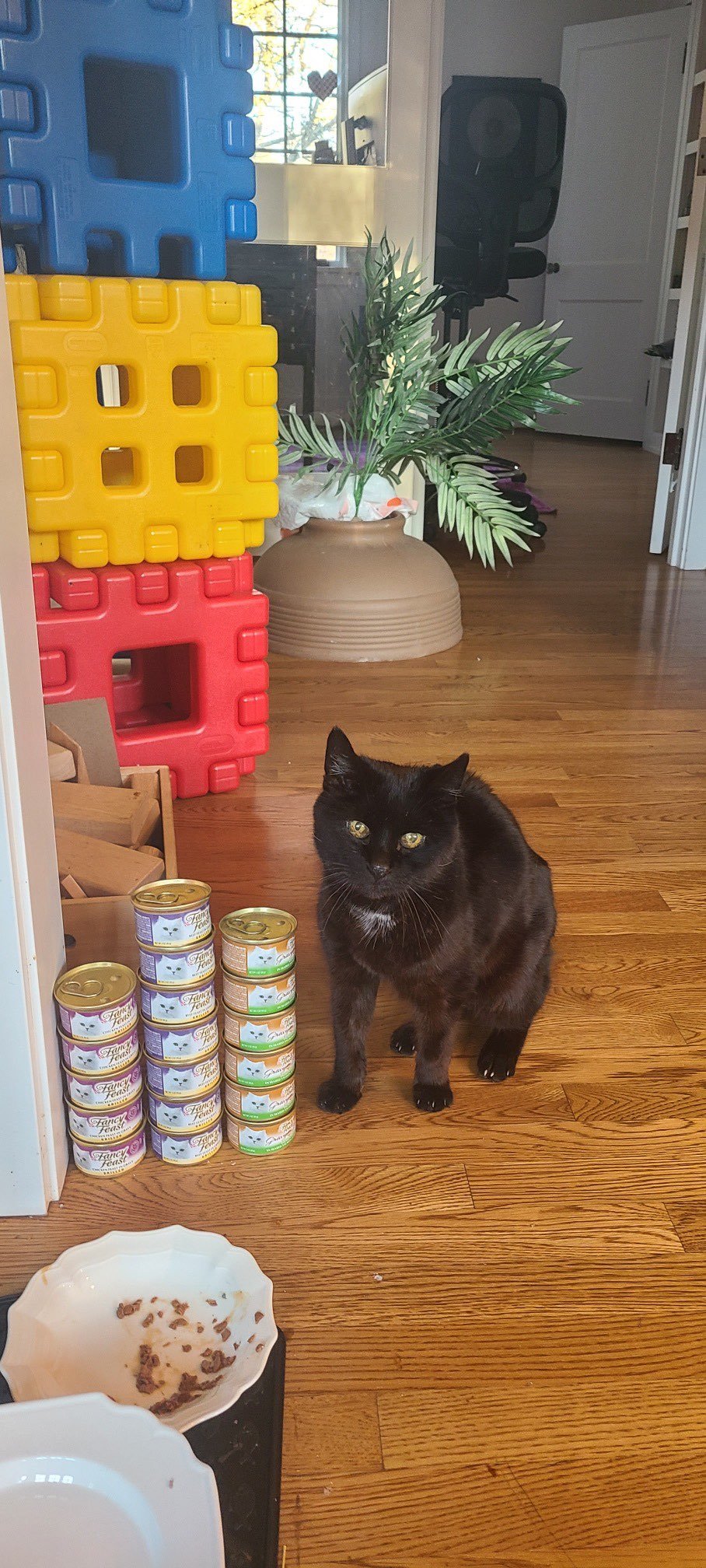
Calories matter for weight control, so ask for the kcal per cup or can, then calculate what one day of feeding actually costs. The price per bag means little if your cat needs double the recommended serving. Include transition time in your plan as well: mix the new food with the old over 7 to 10 days to avoid digestive upset.
A Quick Checklist Before You Buy
| Question to ask | What a good answer looks like |
|---|---|
| Nutritional adequacy statement present? | Yes, “complete and balanced” for a specific life stage |
| Right life stage for my cat? | Matches kitten, adult, or senior needs |
| Fits my cat’s health needs? | Cleared by my veterinarian for any condition |
| Animal protein and taurine? | Named animal sources with adequate taurine |
| Qualified formulator? | Named nutritionist or veterinary nutritionist on staff |
| Manufacturing and QC information available? | Company answers openly and specifically |
| Recall history checked? | No unresolved safety problems |
| Calories and cost per day? | Fits my cat’s weight goals and budget |
Once you have answers, our best cat food planning checklist helps you turn them into a practical feeding routine.
Frequently Asked Questions
What is the most important question to ask about cat food?
Whether the label carries an AAFCO nutritional adequacy statement for your cat’s life stage. Everything else, from ingredients to brand reputation, builds on that foundation.
Should I ask my vet before changing my cat’s food?
Yes, especially for kittens, seniors, or cats with health conditions. Your veterinarian can match the food to your cat’s life stage and medical needs and help you plan a safe transition.
Is “complete and balanced” regulated?
Yes. In the United States, the FDA and AAFCO set the rules, and the phrase may appear only when a food meets AAFCO nutrient profiles or passes an AAFCO feeding trial.
How do I compare protein between wet and dry cat food?
Convert both to a dry-matter basis first. Because wet food is roughly 75 to 78 percent moisture and dry food about 10 to 12 percent, the label values cannot be compared directly without the conversion.
Sources and References
- FDA, “Complete and Balanced” Pet Food: https://www.fda.gov/animal-veterinary/animal-health-literacy/complete-and-balanced-pet-food
- WSAVA Global Nutrition Committee, Guidelines and Toolkit: https://wsava.org/updates/introducing-the-wsava-global-nutrition-committee-gnc-2/
- Tufts Petfoodology, Questions You Should Be Asking About Your Pet’s Food: https://sites.tufts.edu/petfoodology/2016/12/19/questions-you-should-be-asking-about-your-pets-food/
- Cornell Feline Health Center, Feline Nutrition: https://www.vet.cornell.edu/departments-centers-and-institutes/cornell-feline-health-center/health-information/feline-health-topics/cornell-veterinary-experts-address-feline-nutrition
- International Cat Care, Should I Feed My Cat Wet or Dry Food: https://icatcare.org/articles/should-i-feed-my-cat-wet-or-dry-food
- Catster, Cats Are Obligate Carnivores: https://www.catster.com/nutrition/cats-are-obligate-carnivores/